
Ross Creek is primarily a water conservation precinct for Dunedin City, but is also an important heritage, recreation and conservation area for the city. It offers varied pedestrian exercise opportunities for both able-bodied and mobility-impaired users and is used for walking, running and orienteering. Ross Creek also provides important recreational linkages to Craigieburn, Flagstaff, Swampy Summit and the Leith Valley.
The Volcanic Landscape
Both School Creek Valley and the original gully in which Ross Creek flowed have been deeply etched into a rocky layer originally formed as a lava flow from the ancient Dunedin volcano. Active between 16.0 and 9.9 million years ago, it was the largest and most enduring of all the vents in the active local field of about 200 small volcanic cones. The most enduring legacy of Dunedin volcano’s is the deposition of a basaltic rock known today as Leith Valley trachyandesite. Characteristically, it features strong horizontal and vertical jointing that yields rectangular pieces both readily quarried and ideal for building purposes. Another legacy of the area’s geological origins are deposits of fine grained ash emitted at the start of explosive eruptions of the Dunedin volcano which formed a layer over which lava then flowed before solidifying as Leith Valley trachyandesite.
Ross Creek’s Built Heritage
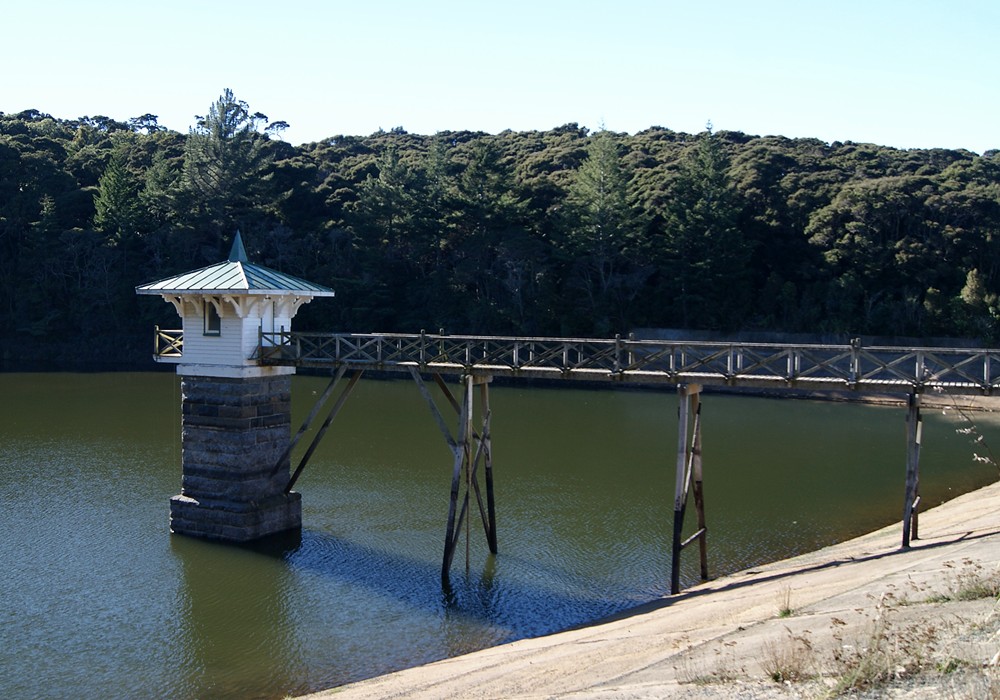 Ross Creek Reservoir was built and managed by a private local firm, the Dunedin Waterworks Company Limited. In 1875, however, the facility was taken over by the Dunedin City Council and has remained under its management. The original design and early construction of the reservoir was undertaken for the Dunedin Waterworks Company by young British engineer, Ralph Donkin, and construction began in August 1865, with the overflow/floodwater channel along the reservoir’s east side created first. The dam and valve tower have been registered by the Historic Places Trust as a Category I Historic Places. Construction of the larger of the two dams came last , in tandem with excavation of the hill slope on the west side. The reservoir build was undertaken by a workforce of 150-200 men who manually excavated the locally-sourced clay and stone. The project was completed in November 1867 and formally opened on December 9th. Though christened the Royal Albert Reservoir, it soon became known as Ross Creek, commemorating Archibald Hilson Ross, a Dunedin optician and for a time Otago’s provincial meteorologist.
Ross Creek reservoir ceased being used for water supply in the 1990s and was then initially decommissioned. In 2010, cracks were discovered in the main dam. In addition to undertaking the necessary repair work, the Dunedin City Council decided to make structural upgrades to meet the latest earthquake and other design standards and to allow the reservoir to potentially function as a back-up water supply for the city in the future. This would provide resilience if an earthquake or other natural disaster impacted the other main water supplies to Dunedin.
The dam refurbishment project was carried out between 2016 and 2019 by Downer Construction, and comprised the following:
-
- the dam itself was strengthened by buttressing the downstream face;
- the crest was raised and a new wave wall was added;
- the spillway was widened to cope with greater design flood flows;
- the wave protection on the upstream face was extended;
- and a new off-take pipe was installed, independent from the original off-take tower and tunnel.
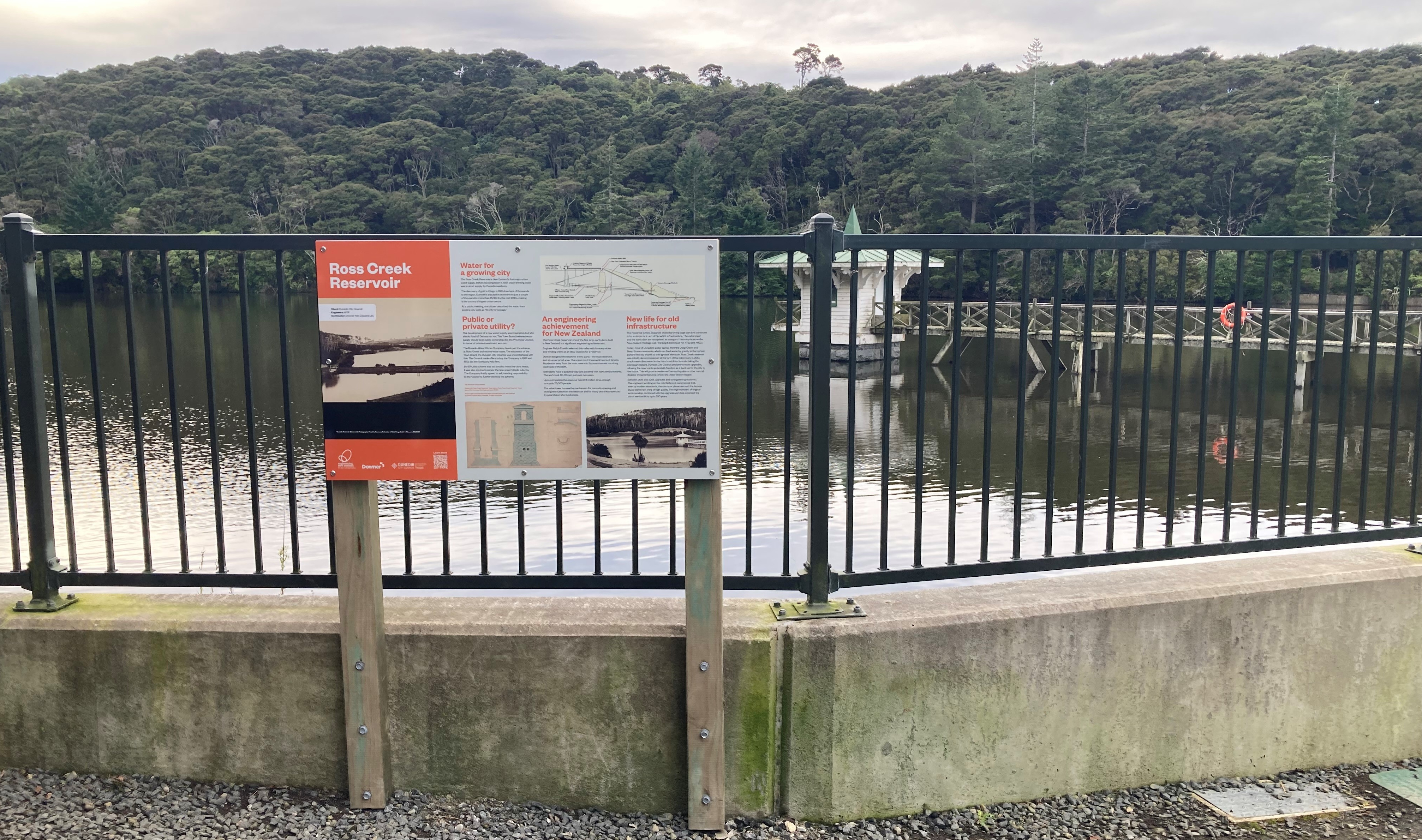
Engineering New Zealand (Otago Heritage section) have recently installed an interpretative panel at the Ross Creek dam, reflecting it’s history from original build to the recent refurbishment work. The panel was supported by the DCC and is located on the footpath at one end of the crest of the dam.
The Forest Environment
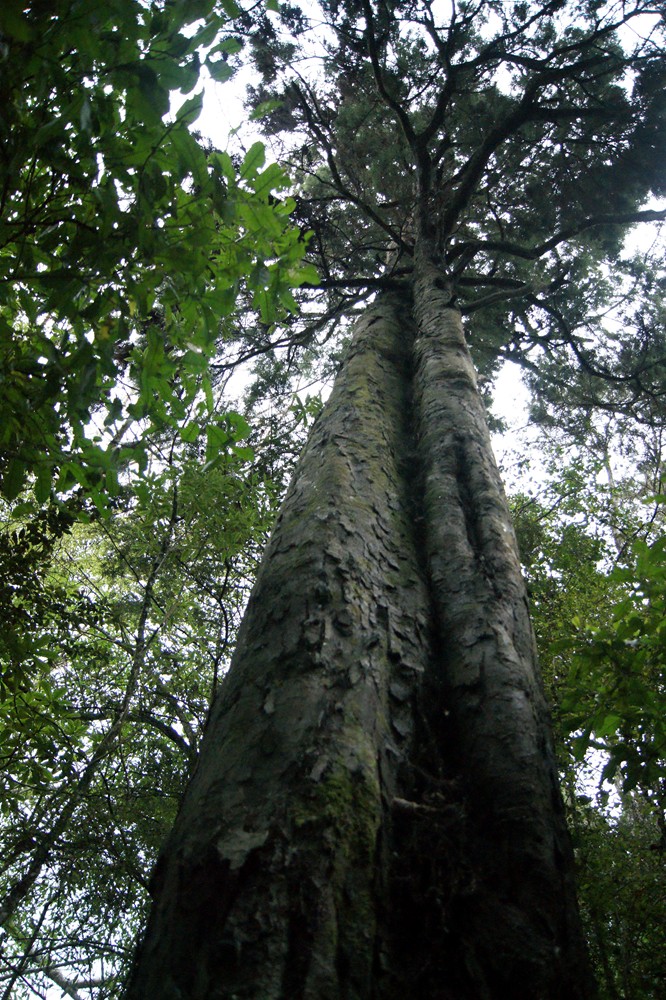 Prior to European settlement Ross Creek was a vibrant and diverse plant lowland forest plant community. During the nineteenth century there was significant forest clearance for firewood, domestic construction and agricultural development. Today, the dominant species around the central pond is the kanuka (Kunzea ericoides) while a few very old broadleaf/kapuka (Griselinia littoralis) and other sub-canopy species remain along with a scattering of aged podocarps on the site.
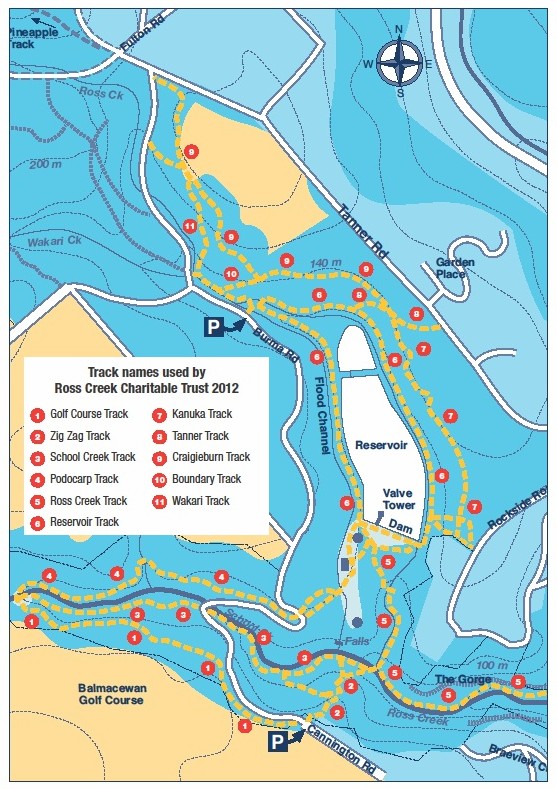
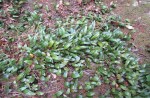
There is a strong fern and ground cover throughout most parts of Ross creek which includes the tall whe (Cyathea smithii), the ground hugging hounds tongue fern/kowaowao (Phymatosorus diversifolius) and the imposing stature of the vase-shaped crown fern (Blechnum discolor). In the kanuka and kapuka canopies lianes like pohuehue (Muehlenbeckia australis) puawhanganga (Clematis paniculata ) supple-jack/karewao (Ripogonum scandens) and the thorny bush lawyer/tataramoa (Rubus schmidelioides) still thrive. A generous under-storey also occurs with fine examples of pate (Schefflera digitata) broadleaf/kapuka (Griselinia littoralis) lemonwood/tarata (Pittosporum eugenioides), peppertree/horopito (Pseudowintera colorata), tree fuchsia/kotukutuku (Fuchsia excorticata) whitey wood/mahoe (Melicytus ramiflorus) and wineberry/makomako (Aristotelia serrata). A small group of podocarp trees including miro (Prumnopitys ferruginea), rimu (Dacrydium cuppressinum), totara (Podocarpus totara), and kahikatea or white pine (Dacrycarpus dacrydioides) still grow on the downhill side of the Podocarp Track.


Birdlife
 Ross Creek provides significant feeding, roosting and breeding habitat to many bird species and is an important part of the biological connectivity in the wider landscape. The presence of the reservoir has created a unique habitat for Australasian coot, black shag, harrier hawk, kingfisher and paradise shelduck as well as spur-winged plover, white-faced heron and the ubiquitous black-backed gull and the plentiful mallard duck. In summer, small swarms of welcome swallow swoop and wheel above the reservoir scavenging insects on the water surface or flying above it. Shags are occasionally seen devouring southern koura the native fresh water lobster (Paranephrops zealandicus) that helps cleanse reservoir water by eating waste and filtering bottom sediment. In the forest canopy and along the track edges visitors will hear and see Bellbirds, Tui, Kereru and Fantails.
Find Craigieburn and Ross Creek
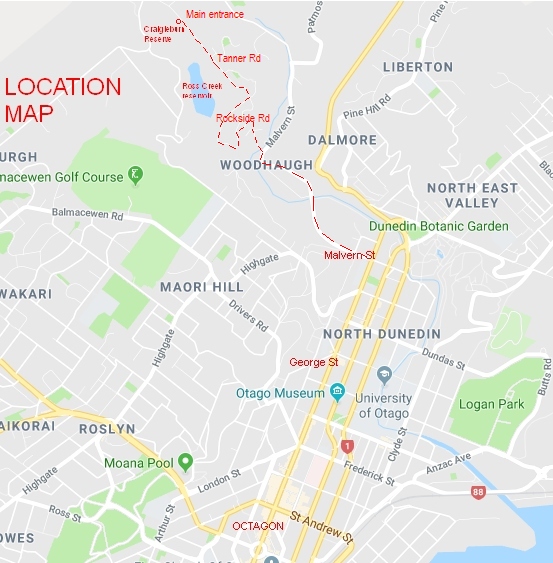
Use the following map to find how to get to Craigieburn and Ross Creek and the surrounding area. Good luck and enjoy your time in a very unique area of Dunedin City.
If you don’t have transport, you can catch Bus No 3 (Marked ‘Ross Creek’ above windscreen) from the Central City Bus Hub in Great King Street, off Moray Place, just down from the Octagon. Ask the bus driver to let you off near the entrance to either Craigieburn or Garden Village Terminus (Ross Creek entrance) in Tanner Road. Takes approximately 15 minutes from Bus Hub to entrance of Craigieburn plus another couple of minutes to Ross Creek.
 The Dunedin Amenities Society
Leave a comment